When we change a light bulb, we often do not realize that we may be dealing with a dangerous item. In fact, fluorescent bulbs contain a small amount of mercury (Hg), a substance that is toxic to the environment and to our health.
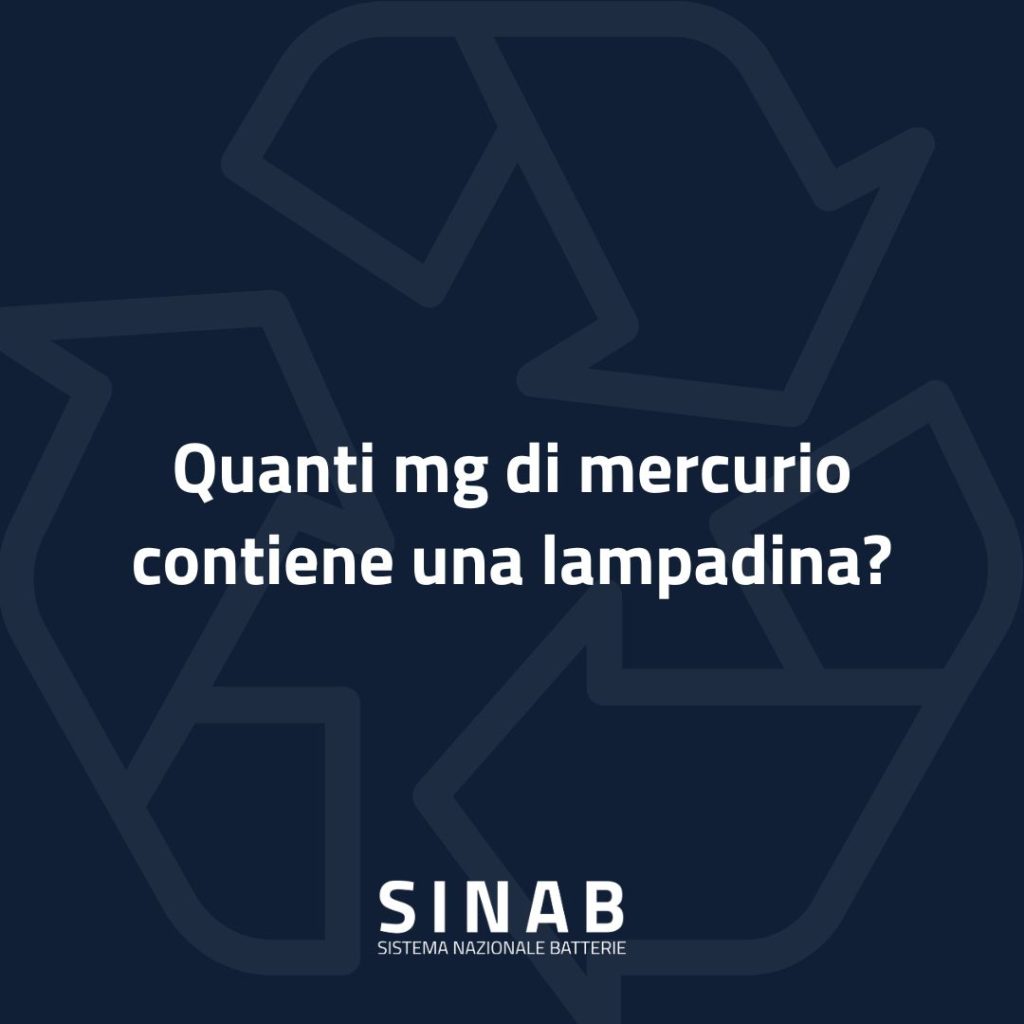
On average, a fluorescent bulb can contain between 3 and 5 milligrams of mercury. A few milligrams, it is true, but enough to require careful and conscientious handling, especially in case of breakage.
What to do if it breaks down?
If a fluorescent bulb breaks:
- Immediately ventilate the room for at least 15 minutes.
- Collect the fragments with gloves and ideally with paper or hard cardboard, avoiding vacuuming.
- Place the remains in a closed container.
How should it be disposed of as a citizen?
It should absolutely not be thrown in the trash or glass. It should be disposed of as WEEE, category R5, that is, light sources.
You can take it to municipal collection centers or rely on the specific collection points found in many electronics stores.
How should it be disposed of by company?
The waste consisting of fluorescent light sources containing mercury, produced by companies, requires caution as it is special hazardous waste. They require suitable packaging for transportation and temporary storage to prevent them from breaking down and causing the mercury inside them to leak. Such lamps are not subject to ADR provided they do not contain radioactive material, nor mercury in quantities greater than those specified in Special Provision 366 of Chapter 3.3 (1 kg. - ed.).
Why dispose of correctly?
Properly disposing of WEEE helps to:
- Avoiding the dispersion of pollutants,
- Recover valuable materials,
- Contributing to the circular economy.
Even a small gesture, like throwing out a light bulb the right way, can make a difference. Mercury is hidden, but its effects are not: let's do our part.